Services / Brakes
Mobile Brake Service — Pads, Rotors, Calipers, ABS
Our original service, and the most requested one in summer: more kilometres, more luggage, more trips to the cottage — brakes take a beating during peak season. Pads, rotors and calipers replaced right in your driveway, with a confirmed price before you book. Brake fluid flush included when needed.
Get My Quote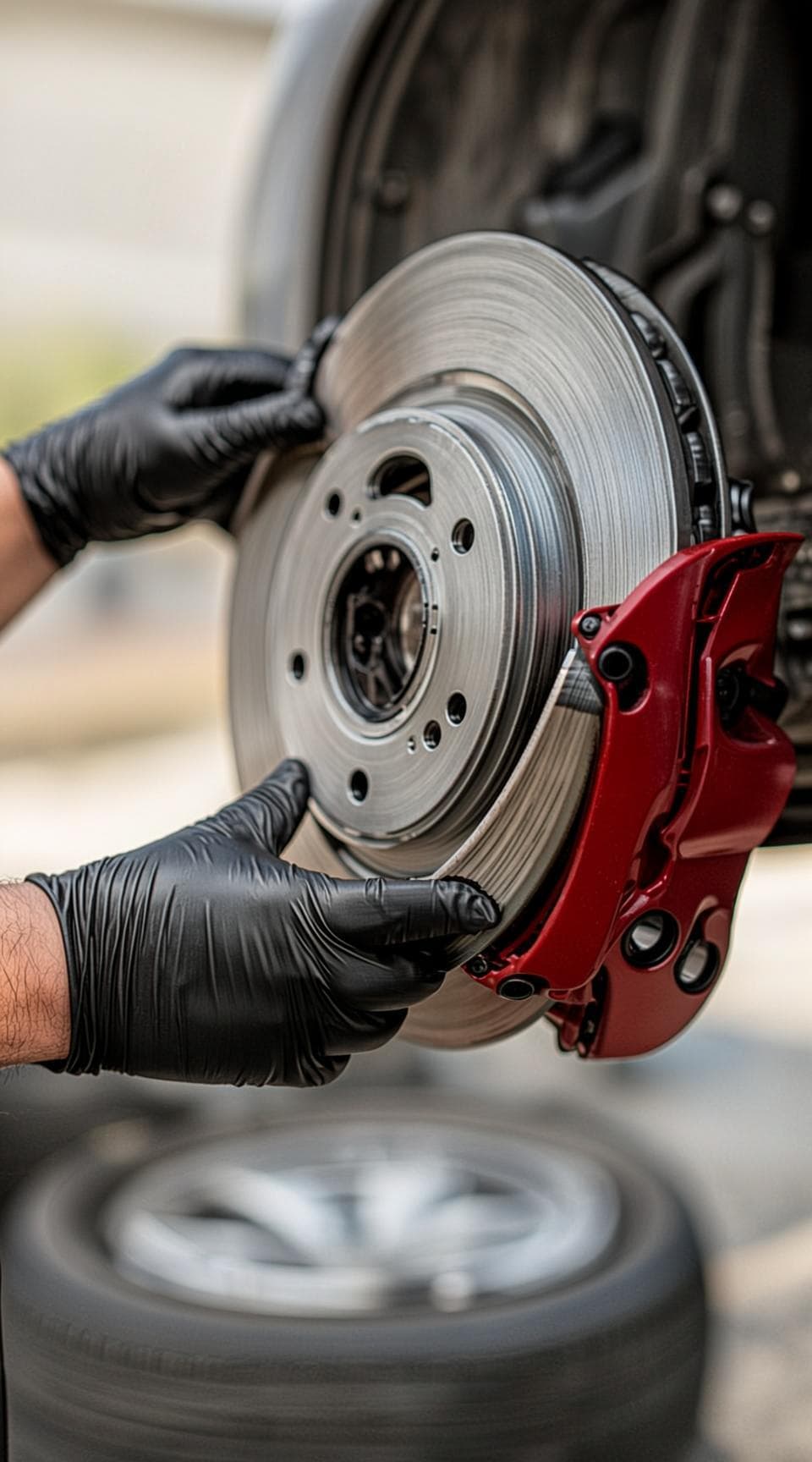
What's included
- Front and/or rear brake pads
- Front and/or rear rotors
- Seized or leaking calipers
- ABS sensor diagnosis and replacement
- Brake fluid flush and replacement
Brake Pads
The part that wears out first: it clamps the rotor to stop the wheel every time you brake. A worn pad shows up as a sharp, constant squeal, or a longer stopping distance than before. Most pads also have a metal wear indicator that scrapes the rotor once the limit is reached — that's the signal not to ignore. Typical lifespan: 50,000 to 80,000 km depending on driving style.
Brake Rotors
The rotor is the surface the pads clamp onto. A worn or warped rotor is felt while braking: a vibration in the pedal or steering wheel, especially at highway speed, usually points to a rotor deformed by heat. We replace rotors and pads together most of the time — it gives the best result and avoids uneven wear on new pads riding against an old rotor.
Brake Calipers
The caliper holds the pads and presses them against the rotor. A seized caliper brakes harder on one side than the other — the vehicle may pull slightly under braking, and one wheel wears faster than the other. A leaking caliper drops the brake fluid level and softens the pedal. Either way, our technician diagnoses it before charging anything.
ABS Brakes
The ABS (anti-lock braking) system keeps the wheels from locking up during hard braking, so you keep control of the vehicle. An ABS light on the dash almost always comes from a dirty or faulty wheel-speed sensor, not the whole system — that's what our technician diagnoses and replaces at home. (For a failure of the ABS module itself, much rarer, we'll honestly point you to the right shop.)
Frequently asked questions
- What's the difference between brake pads and rotors?
- The pad is the part that wears out and gets replaced most often; the rotor is the surface it clamps onto. We usually replace both together for optimal braking, but pads alone are sometimes enough if the rotor is still in good shape.
- How do I know if my brake pads are worn?
- A sharp, constant squeal (the wear indicator scraping), a longer stopping distance, or a pedal that goes lower than before. Our online diagnostic helps tell the difference in 2 minutes.
- What is the ABS brake system, and why is the light on?
- ABS keeps the wheels from locking up during hard braking. The light almost always comes on because of a faulty wheel-speed sensor — a service we offer at home — rather than the whole ABS module.
- How often should brake rotors be replaced?
- There's no fixed mileage: it depends on wear and vibration while braking. Many rotors get replaced along with the pads, roughly every 50,000 to 100,000 km.
- Why do my brakes work harder in summer?
- More kilometres driven, extra luggage or a trailer, trips to the cottage often on hilly roads: all of this puts more strain on your brakes than typical city driving. It's the time of year when a quick inspection avoids bad surprises.
- How long does a brake job take?
- Between 1 and 2 hours depending on the service (one axle or both, pads only or pads + rotors).
- Does the price include parts and labor?
- Yes, the online quote shows an all-in price (parts, labor, taxes) before you even book.
Ready to book?
Get your exact price in 2 minutes — parts, labor and taxes included.
Get My QuoteOther services: Battery · Alternator & Starter · Spark Plugs · Serpentine Belt · Oil Change · Wheel Bearing